
How to Tell If Your AC Evaporator Coil Is Dirty
What Is an AC Evaporator Coil?
Your air conditioner’s evaporator coil is one of the most important components in the cooling process. Located inside the indoor portion of your HVAC system, the coil absorbs heat from the air circulating through your home. As warm indoor air passes over the cold coil, heat is removed from the air before the conditioned air is sent back through your home’s ductwork.
 The evaporator coil also plays a role in removing moisture from indoor air. During cooling, condensation forms as warm air contacts the cold coil, and that moisture should drain into the system’s condensate pan and away from the equipment.
When dirt and debris build up on the coil, airflow and heat transfer can be affected. The EPA identifies cooling coils as important HVAC components that should be properly maintained and notes that dirty coils can waste energy and contribute to thermal discomfort.
For Phoenix homeowners, keeping the evaporator coil clean is particularly important because an AC system may operate for long periods during the cooling season. More operating time means the system has more opportunities to pull airborne dust and particles through the HVAC system.
7 Signs Your AC Evaporator Coil May Be Dirty
A dirty evaporator coil is not always easy for a homeowner to see because the component is typically located inside the indoor air handler or evaporator cabinet. Instead, homeowners often notice changes in how their AC performs.
1. Reduced Airflow
If significantly less air is coming from your vents than usual, a dirty coil could be one possible cause. However, restricted airflow can also result from a dirty filter, duct restriction, blower problems, or other HVAC issues.
2. Your AC Runs Longer Than Normal
A restricted or dirty coil can interfere with the system’s ability to transfer heat effectively. Your AC may consequently need to operate longer to reach the thermostat setting.
3. The Home Is Not Cooling Evenly
If some rooms remain warmer than others, the cause could involve the evaporator coil, ductwork, airflow, insulation, solar heat gain, or system sizing. A technician can determine whether the coil is actually contributing to the problem.
4. Ice on the Coil or Refrigerant Lines
Ice or frost around the indoor coil or refrigerant lines is a warning sign that should not be ignored. Restricted airflow is one potential cause, but refrigerant-related problems and other issues can also result in freezing.
Turning the system off and allowing it to thaw may be appropriate while waiting for professional service. Do not attempt to scrape ice from the coil, as doing so can damage the equipment.
5. Higher Energy Consumption
When an HVAC system has to work harder or run longer to provide the same amount of cooling, energy consumption can increase. The EPA notes that maintenance of cooling system components, including coils, can support system efficiency.
6. Excess Moisture or Drainage Problems
Because the evaporator coil produces condensation during normal cooling, the condensate pan and drain system need to remain clean and functional. The EPA specifically recommends keeping cooling coils and drain pans clean and ensuring that condensate drains properly.
7. A Noticeable Decline in Cooling Performance
If your AC used to cool your home effectively but now struggles to maintain the thermostat setting, the evaporator coil is one of several components that should be evaluated.
Important: These symptoms do not automatically prove that your evaporator coil is dirty. Several HVAC problems can produce similar symptoms, so professional diagnosis is important before assuming the coil needs cleaning.
Why Do Evaporator Coils Get Dirty?
The evaporator coil is exposed to the air moving through your HVAC system, so dust and airborne particles can accumulate on the coil over time. A filter helps capture particles before they reach the equipment, which is why using the correct filter and replacing it according to manufacturer recommendations is an important part of HVAC maintenance.
The EPA recommends changing or cleaning HVAC filters regularly according to the manufacturer’s instructions. It also recommends using the highest-efficiency filter that is appropriate for the HVAC system.
Other factors can contribute to coil contamination, including:
- A filter that is dirty, damaged, incorrectly installed, or the wrong size
- Gaps around the filter that allow air to bypass filtration
- Dust and debris entering the HVAC system
- Poor system maintenance
- Construction or remodeling dust
- Moisture around the cooling coil or drain pan
- Other HVAC airflow or installation issues
The EPA notes that cooling coils can become contaminated with dust and debris and recommends including coils and drain pans as part of appropriate HVAC maintenance. It also emphasizes controlling moisture because excessive moisture can contribute to biological contamination.
For Phoenix homes, regular filter checks and professional HVAC maintenance can help limit the amount of debris reaching the indoor coil.
Can You Clean an AC Evaporator Coil Yourself?
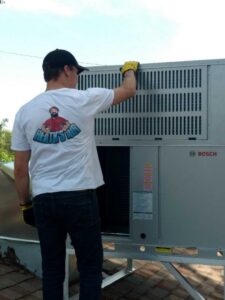 Replacing a standard HVAC filter is a homeowner-friendly maintenance task, but accessing and cleaning an evaporator coil is more complicated.
The coil may be located inside an air handler or enclosed section of the HVAC system. Reaching it may require removing access panels, and improper cleaning can bend delicate coil fins or damage other components.
The EPA recommends that heating and cooling system components be properly maintained and that qualified service providers be used when professional cleaning is needed. Its guidance also recommends inspecting cooling coils and drain pans as part of HVAC maintenance.
Before assuming the coil needs cleaning, a technician should also check the rest of the system. A dirty filter, inadequate airflow, refrigerant problem, blocked condensate drain, blower issue, or duct problem could produce similar symptoms.
A professional AC inspection can evaluate:
- Evaporator coil condition
- Air filter condition and fit
- Blower operation
- Supply and return airflow
- Condensate drain and pan
- Refrigerant-related conditions
- Electrical components
- Ductwork
- Overall cooling performance
When Should Phoenix Homeowners Schedule AC Service?
If your Phoenix AC has noticeably weaker airflow, runs longer than usual, struggles to cool the home, develops ice, or has drainage problems, it is worth having the system professionally evaluated.
A dirty evaporator coil may be the cause, but it is important not to diagnose the problem based on symptoms alone. An HVAC professional can inspect the coil and surrounding components to determine whether cleaning is necessary and whether another issue is contributing to poor performance.
Regular maintenance can also help identify developing problems before they become larger cooling issues. The EPA recommends preventive HVAC maintenance, regular filter changes, and attention to cooling coils and drain pans.
For Phoenix homeowners, keeping the indoor side of the AC system clean and properly maintained can help support reliable cooling throughout the demanding summer season.
If you suspect your evaporator coil is dirty, Heath’s Air can inspect your Phoenix-area AC system, identify the source of the cooling problem, and recommend the appropriate service. Book your free estimate today!